

About Vietnam Climate Week 2026
Vietnam Climate Week 2026 is a national platform that brings together government, business, finance, development partners, academia, innovators, and communities to accelerate climate action. Held in the lead-up to COP31, the Week connects policy, finance, and innovation to foster collaboration, showcase solutions, and strengthen the partnerships needed to deliver Vietnam's climate ambitions.

4 CITIES
❈
60+ SPEAKERS
❈
50+ PARTNER ORGANIZATIONS
❈
55 SESSIONS
❈
1,000+ PARTICIPANTS
❈
4 CITIES ❈ 60+ SPEAKERS ❈ 50+ PARTNER ORGANIZATIONS ❈ 55 SESSIONS ❈ 1,000+ PARTICIPANTS ❈

Why we convene
Vietnam's climate transition requires coordinated action across sectors. Vietnam Climate Week creates the space for policymakers, investors, businesses, researchers, entrepreneurs, and communities to connect, exchange knowledge, and build partnerships that accelerate practical climate solutions.
Our objectives
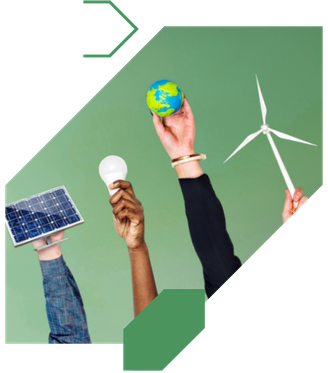
Strengthen collaboration across government, business, finance, development, and the innovation ecosystem to accelerate climate action.
Advance partnership
Connect climate innovators with investors, financial institutions, and funding opportunities to help scale impactful solutions

Unlock climate finance
Highlight innovative technologies, business models, and initiatives that demonstrate practical pathways to decarbonization and climate resilience.

Showcase climate solutions
Engage businesses, communities, and the public through experiences that are more accessible, inclusive, and actionable.

Inspire

About the hosts
Vietnam Climate Week 2026 (VNCW 2026) is a four-day, four-city initiative of development partners responding to the Government of Vietnam’s priorities on climate change response. Moving in the lead-up to COP31, it creates a space to foster climate dialogue, recognize progress, and leverage multi-stakeholder participation - engaging policy makers, the private sector, development actors, research institutions, and communities across Vietnam’s climate transition.
The Week is facilitated by lead development partners including SNV Netherlands Development Organisation, New Energy Nexus Vietnam (NEXVN), and WUSC (World University Service of Canada), with events shared with the Government of Vietnam for broader coordination and support. Primary funding is provided by the Australian Government (DFAT), the German Government (via IKI and FES).
New Energy Nexus Vietnam (NEXVN)
New Energy Nexus Vietnam was launched in early 2019 with the mission of promoting Vietnam’s clean energy transition. We have supported over 500 entrepreneurs and engaged over 1,500 participants through our incubation, acceleration, and funding programs. With our backing, startups have generated US$1.4 million in grants.
By enhancing our strong bond with all the stakeholders in the network, we aim to further develop the energy ecosystem in support of a smooth transition to sustainable initiatives and build a pipeline of potential entrepreneurs.
SNV Vietnam
SNV is a global development partner deeply rooted in the African and Asian countries where we operate. With 60 years of experience and a team of approximately 1,600 people, we strengthen capacities and catalyse partnerships that transform agri-food, energy and water systems. Working on the core themes of gender equality and social inclusion, climate adaptation and mitigation, and strong institutions and effective governance, we tailor our approaches to different contexts to achieve large-scale impact and create sustainable and more equitable lives for all.
WUSC
World University Service of Canada (WUSC) is a Canadian non-profit organization working across more than 25 countries to create a world where every young person thrives and belongs.
Operating in Vietnam for over three decades, WUSC collaborates with the public and private sectors, civil society, and local communities to foster an inclusive green economy, empower women and youth, and build resilience against climate change. WUSC serves as the primary implementing agency for major Canadian-funded initiatives in Vietnam, including the AGILE, IGNI+E, STLM, and FSSP projects.